Explanation of several terms used in the visual arts in relation to realistic drawing and painting. Each explanation includes a work as an example of the term explained.
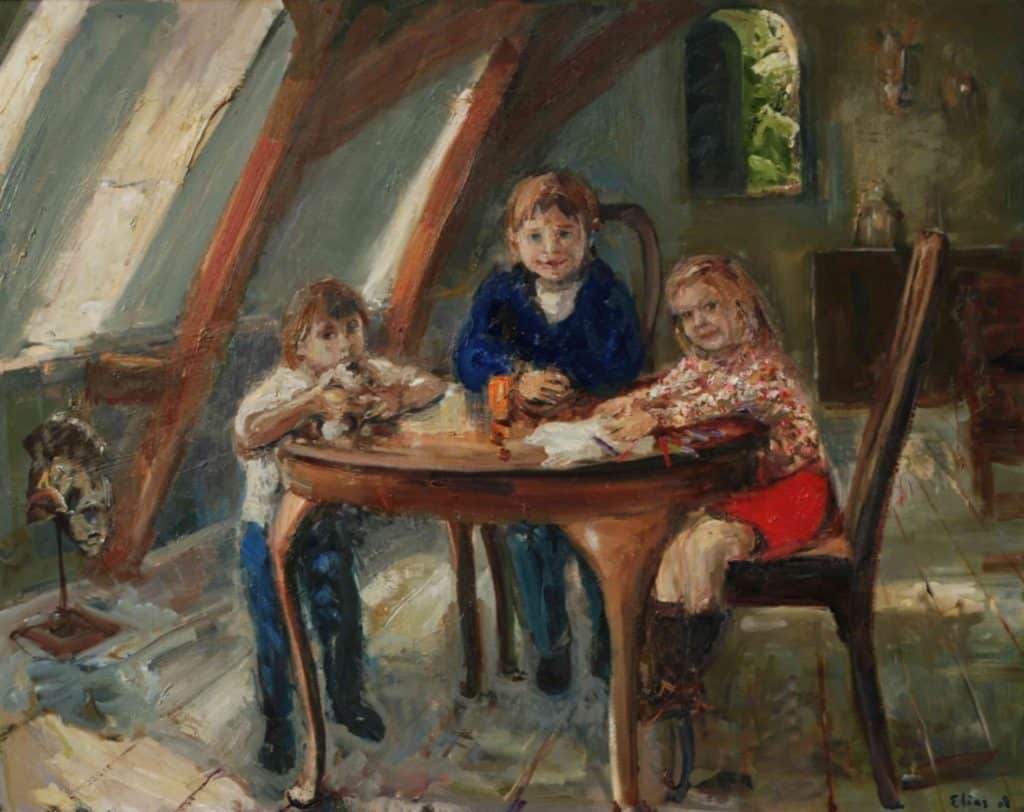
painting by Douwe Elias
Realistic art
Although different definitions are used, we can consider realistic art as expressions of drawing and painting in which reality is immediately visible to everyone in the creation. Realistic drawing and painting is therefore an art form or way of depicting that forms a true-to-life representation/reflection of reality, often with an eye for detail, without idealization or embellishment. This is in contrast to abstract art, in which the subject is not recognizable as something existing.
Magic realism
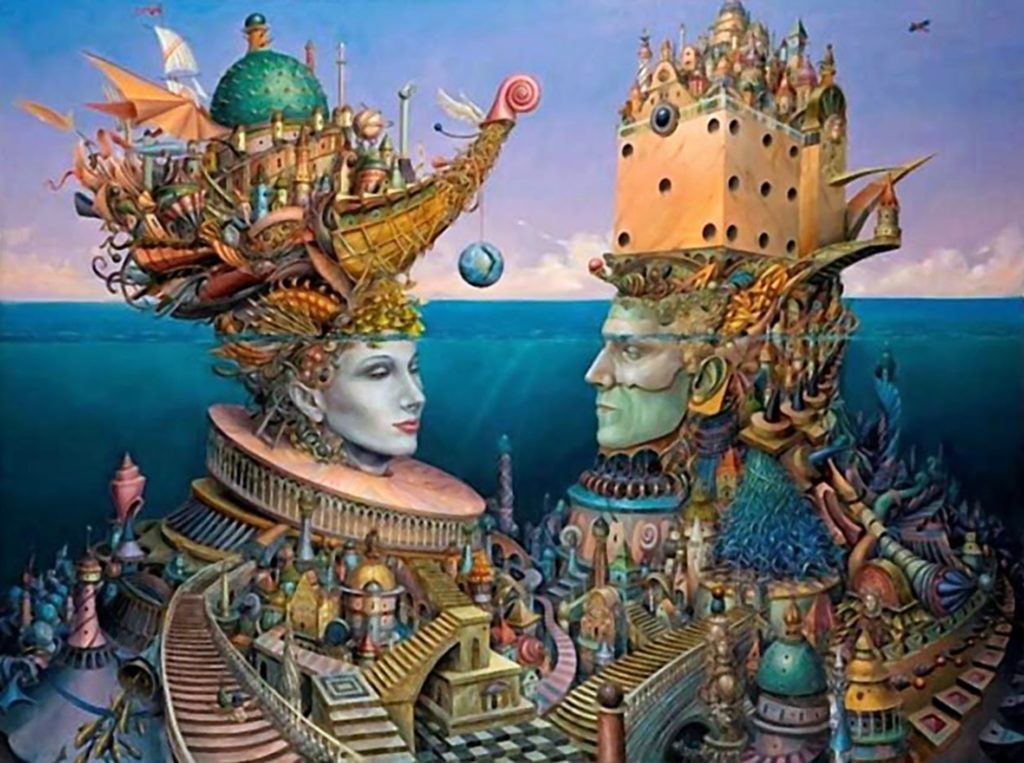
The term magic realism, also known as fantastic realism, is a direction in art in which a reality is connected with another or higher reality, creating hallucinatory images or dream effects. As a result, magic realism is related to surrealism, which also aims at alienating effects by placing more or less realistic representations in unusual contexts and environments.
painting by Tomek Setowski 1961
Surrealism
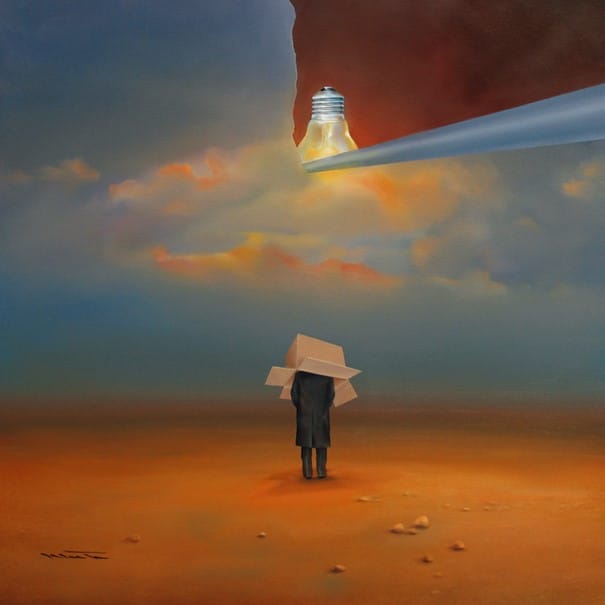
Surrealism is an art movement in which the separation between the unconscious inner world and the external world is lifted. Surrealist artists attach great importance to associations, hallucinations and dreams in which, according to them, the subconscious comes to the surface. Surrealist paintings are painted in a precise technique, with images of objects that are not normally combined and other alienating scenes.
painting by Rene Schute
Photorealism
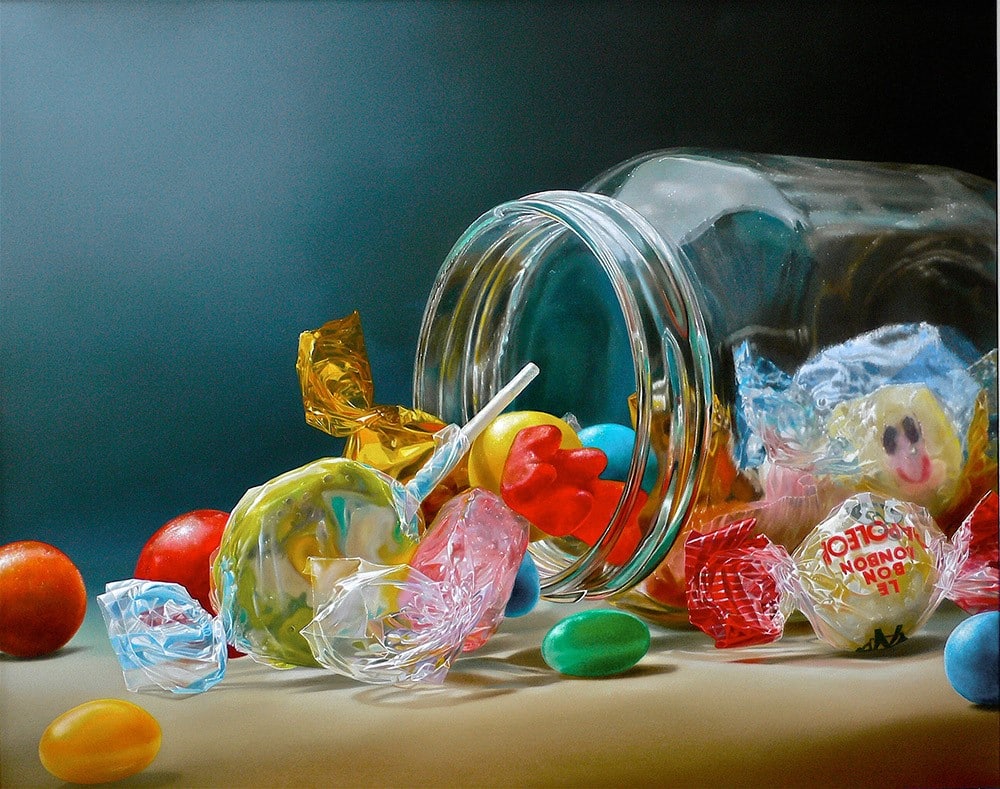
Photorealism, also known as hyperrealism or superrealism, developed in the late 1960s and 1970s as a reaction to abstract expressionism, which had dominated art since the 1940s. Photorealism strives to accurately represent reality; sometimes the style seems more real than reality, with no detail omitted.
painting by Tjalf Sparnaay
Naïve realism
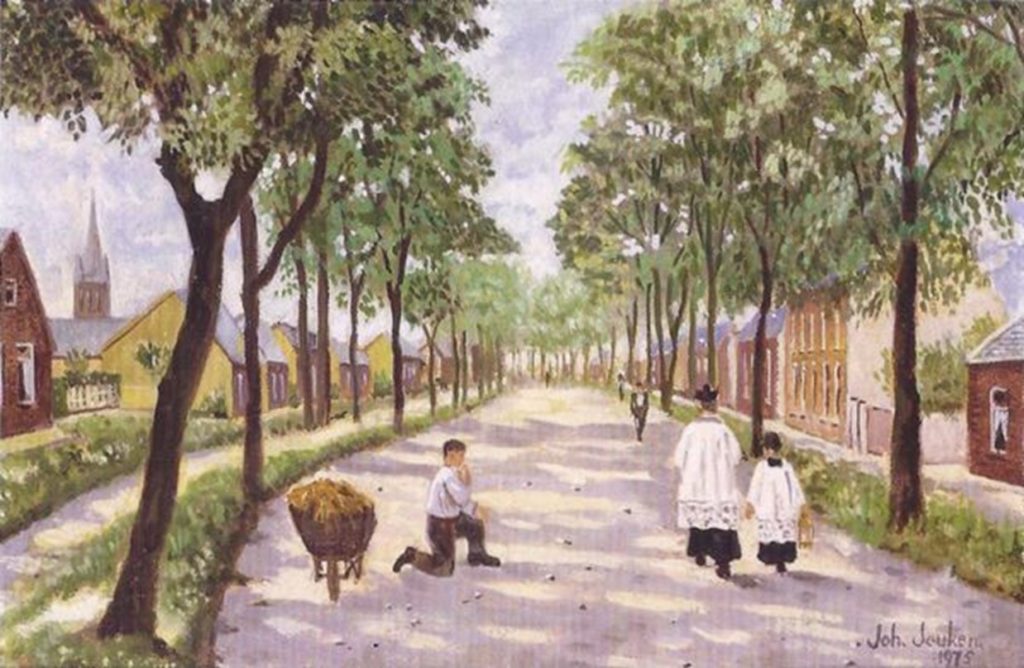
Naïve realism is realistic art created by untrained makers, also known as ‘Sunday painters’ or ‘outsiders’. Initially, this art was looked down upon. But in the years 1920-1945, naïve realism managed to climb to the artistic top and gain appreciation, both in Europe and the United States. Visual art, made in a childlike way by the ‘ordinary’ man and woman, also gained recognition from museums and art collectors at that time. Characteristic of naïve art is the idiosyncratic, often richly detailed, colorful and heartfelt representation of reality.
painting by Johan Jeuken
Still life
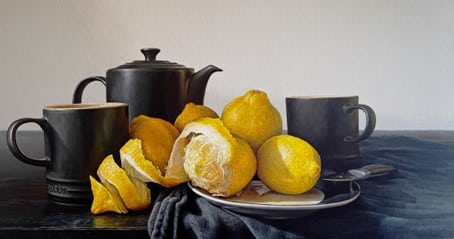
A still life is a composition of motionless or lifeless objects, in which, in addition to the composition, the lighting plays an important role.
painting by Amarins Lyklema
Portrait
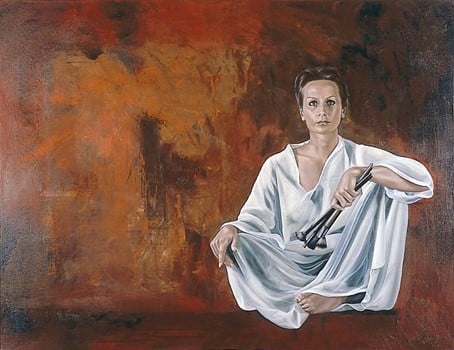
In general, a portrait is considered to be a representation of a person or persons. But it can also be the representation of an animal. Sometimes a portrait is seen as the same as the representation of a face. A special form of a portrait is the portrait historié. The portrayed are then depicted as mythological, Biblical, legendary or literary figures.
painting by Ans Markus
Terms such as Lyrical realism and Poetic realism are also sometimes used. These forms of realism have several similarities with magic realism, surrealism and naïve painting.